


Hey there! As a water purifier supplier, I often get asked about how different components in a water purifier work. One of the key parts that many people are curious about is the TDS controller. So, in this blog, I'm gonna break down how a TDS controller in a water purifier works.
First off, let's understand what TDS is. TDS stands for Total Dissolved Solids. These are basically all the inorganic and organic substances present in water in a dissolved form. Things like salts, minerals, metals, and even some small organic molecules. The amount of TDS in water can have a big impact on its taste, as well as its suitability for different uses. For example, water with very high TDS might taste salty or bitter, and it might not be ideal for drinking or using in some industrial processes.
Now, let's talk about the TDS controller. Its main job is to monitor and control the TDS level in the purified water coming out of the water purifier. This is super important because we want the water to have an optimal TDS level for whatever use it's intended for.
The working principle of a TDS controller is based on conductivity. You see, dissolved solids in water can conduct electricity. The more dissolved solids there are, the higher the conductivity of the water. The TDS controller has a probe that is placed in the water. This probe measures the electrical conductivity of the water. Based on this measurement, it can then calculate the TDS level.
Most TDS controllers use a simple formula to convert the conductivity reading into a TDS value. Usually, it's something like multiplying the conductivity by a conversion factor. This conversion factor can vary depending on the type of dissolved solids in the water, but a common value is around 0.5 - 0.7. So, if the conductivity reading is, say, 1000 microsiemens per centimeter, and the conversion factor is 0.6, then the calculated TDS level would be 600 parts per million (ppm).
Once the TDS controller has determined the TDS level, it can take different actions based on the settings. There are generally two main types of control modes: manual and automatic.
In the manual mode, the user can set a specific TDS level that they want the water to have. The TDS controller will then monitor the water and give an indication if the TDS level goes above or below this set value. The user can then take appropriate action, like adjusting the purification process or changing the filter.
In the automatic mode, the TDS controller can actually control the water purifier's operation. For example, if the TDS level in the incoming water is too high, the controller can increase the purification process. It might do this by increasing the pressure in a RO Water Purifiers system, which forces more water through the semi - permeable membrane and removes more dissolved solids.
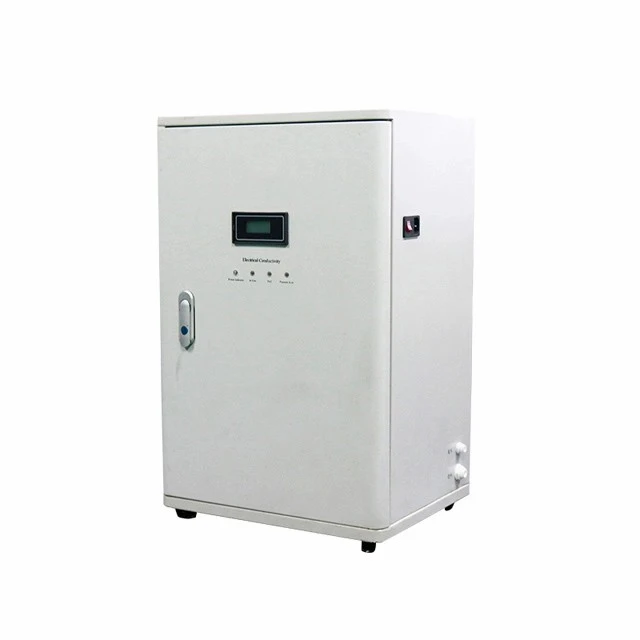
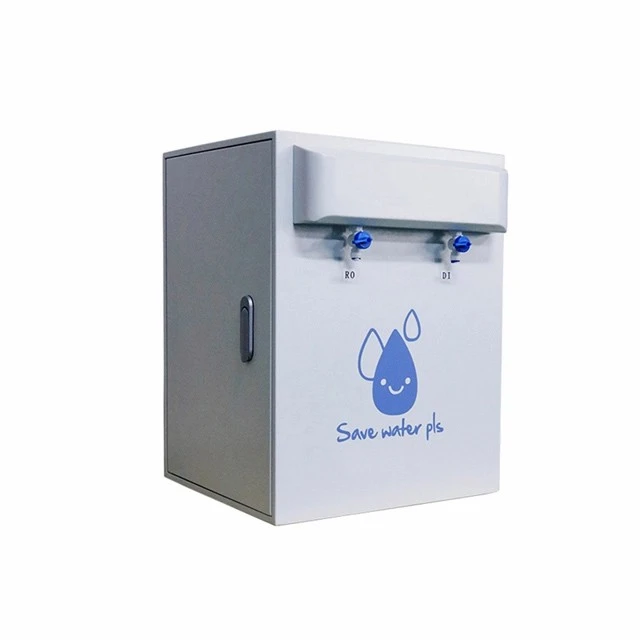
On the other hand, if the TDS level in the purified water is too low, the controller might allow some of the pre - filtered water to mix with the purified water. This is because water with extremely low TDS can sometimes lack essential minerals and might not be very healthy for long - term consumption.
Let's take a closer look at how the TDS controller interacts with different types of water purifiers.
RO Water Purifiers
In a RO Water Purifiers system, the TDS controller plays a crucial role. RO systems use a semi - permeable membrane to remove dissolved solids from water. The TDS controller monitors the TDS level of the incoming water and the purified water. If the incoming water has a very high TDS level, the controller can adjust the operating parameters of the RO system. It can increase the pressure applied to the water, which helps in better filtration. At the same time, it can also monitor the TDS level of the purified water. If the TDS level of the purified water is still too high, it might indicate that the membrane is getting clogged or is not working properly. The controller can then send an alert to the user, prompting them to replace the membrane or perform maintenance.
Automatic RO Water Purifier
The Automatic RO Water Purifier takes the functionality of the TDS controller a step further. In an automatic system, the TDS controller can fully automate the purification process. It continuously monitors the TDS level of the water at different stages of the purification process. Based on the readings, it can adjust the flow rate of the water, the pressure in the system, and even the amount of chemicals (if any) added for pre - treatment. For example, if the TDS level of the incoming water suddenly increases, the controller can increase the pre - treatment time or the dosage of the pre - treatment chemicals to ensure that the RO membrane is not overloaded.
Automatic Ultra - pure Water Purifier
The Automatic Ultra - pure Water Purifier requires an even more precise control of the TDS level. Ultra - pure water is used in many sensitive applications like laboratories, semiconductor manufacturing, and medical research. The TDS controller in an automatic ultra - pure water purifier has to maintain the TDS level at an extremely low and stable value. It uses advanced sensors and control algorithms to achieve this. It can detect even the slightest changes in the TDS level and make immediate adjustments to the purification process. For example, it might use additional polishing steps like ion - exchange resins or UV sterilization to remove any remaining dissolved solids.
Now, you might be wondering why having a TDS controller in your water purifier is so important. Well, here are a few reasons:
- Improved water quality: By controlling the TDS level, you can ensure that the water has the right balance of minerals and is free from excessive dissolved solids. This results in better - tasting water that is also healthier to drink.
- Extended filter life: The TDS controller can prevent the water purifier from over - working. By adjusting the purification process based on the TDS level, it can reduce the wear and tear on the filters and membranes. This means you won't have to replace them as often, saving you money in the long run.
- Customized water: Different people have different preferences when it comes to the TDS level of their water. Some might prefer water with a higher TDS level for a more mineral - rich taste, while others might want it lower. With a TDS controller, you can customize the TDS level of the water according to your needs.
If you're in the market for a water purifier with a reliable TDS controller, look no further. We, as a water purifier supplier, offer a wide range of water purifiers with advanced TDS control technology. Whether you need a simple RO water purifier for your home or a high - end automatic ultra - pure water purifier for your business, we've got you covered.
If you're interested in learning more about our products or want to start a procurement negotiation, feel free to reach out to us. We're always happy to discuss your specific requirements and find the best water purifier solution for you.
References
- "Water Treatment Handbook" by A. K. Pandey
- "Principles of Water Purification" by John Doe