


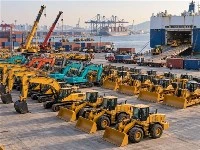
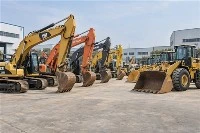
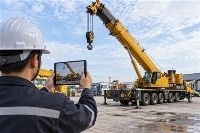
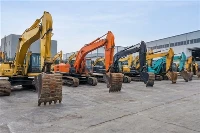
When overseas buyers search for used construction machinery, one of the first questions is usually:
"What is your lowest price?"
Price is important, especially when comparing used excavators, truck cranes, bulldozers, wheel loaders, forklifts and other heavy equipment from different suppliers.
However, experienced contractors, machinery dealers and rental companies increasingly understand that the lowest purchase price does not always mean the lowest equipment cost.
The real cost of a used machine begins with the quotation, but it continues through transportation, maintenance, parts replacement, fuel consumption, downtime and eventually resale.
For this reason, professional equipment buyers should evaluate total ownership value, rather than focusing only on the initial purchase price.
Purchase Price Is Only the First Cost

Consider two used excavators of the same model.
Machine A is significantly cheaper.
Machine B costs more but has a stronger hydraulic system, better undercarriage, newer track components and clearer maintenance history.
At first glance, Machine A appears to be the better deal.
But after delivery, Machine A may require new rollers, sprockets, hydraulic hoses and engine maintenance. It may also lose working days while parts are being sourced.
Once these costs are included, the cheaper machine can become the more expensive investment.
This is why equipment valuation specialists consider more than purchase price. EquipmentWatch, for example, incorporates factors such as ownership cost, operating cost and residual value when evaluating equipment economics.
Understand the Total Landed Cost
For international buyers, the machine price should never be evaluated separately from transportation.
A practical way to think about the purchase is:
Total Landed Cost = Machine Price + China Inland Transport + Port Charges + International Freight + Import Costs + Initial Preparation
Depending on the machine, international shipping may represent a meaningful part of the final investment.
A compact forklift may fit into a standard container.
A crawler excavator may require flat rack, Ro-Ro or bulk shipping.
A large bulldozer or wheel loader may require special loading arrangements.
Truck cranes and all-terrain cranes can create additional transportation considerations because of their weight, dimensions, boom configuration and counterweights.
This means a machine that is USD 3,000 cheaper but significantly more expensive to transport may not actually offer a price advantage.
Overseas buyers should therefore request both the machine quotation and estimated shipping solution before making a final comparison.
Initial Repair Cost Can Completely Change the Deal
Used construction machinery naturally has wear.
The question is not whether a machine has wear, but how much money will be required to keep it working reliably.
For a used excavator, common high-cost areas may include the hydraulic pump, engine, travel motors, final drives, undercarriage and hydraulic cylinders.
For a used truck crane, buyers may need to consider the telescopic boom, hydraulic system, wire rope, winches, outriggers, tires and chassis.
For bulldozers, undercarriage components, transmission, blade system and final drives can significantly influence future repair cost.
For wheel loaders, tires, transmission, articulation joints and hydraulic systems deserve careful attention.
A low purchase price can quickly lose its advantage when several expensive components need replacement immediately after delivery.
The important question is therefore not:
"How cheap is this machine?"
It is:
"How much money will I need to spend before this machine can work reliably?"
Downtime Is a Hidden Cost
Repair cost is only part of the problem.
Equipment downtime can sometimes cost more than the repair itself.
If an excavator breaks down during a road project, work may stop.
If a truck crane is unavailable during equipment installation, the contractor may need to rent another crane.
If a wheel loader stops working in a quarry or aggregate yard, material handling productivity can fall immediately.
EquipmentWatch identifies maintenance, repairs, depreciation and idle time among the costs that can materially affect the economics of equipment ownership.
For contractors, machine availability directly affects project schedules.
For rental companies, a machine that cannot work cannot generate rental income.
For equipment dealers, a machine requiring extensive repair cannot be resold quickly.
This means reliability has financial value.
Parts Availability Can Be More Important Than Machine Age

An older popular machine can sometimes be easier to own than a newer but uncommon model.
Why?
Because spare parts matter.
A machine that has strong parts availability can usually be repaired faster and more economically.
A machine with limited parts support may remain idle while the owner searches internationally for hydraulic components, sensors, engine parts or drivetrain components.
Industry commentary in 2026 has increasingly highlighted the connection between spare-parts availability and equipment resale value. Machines with wider dealer support, aftermarket parts, trained technicians and familiar repair procedures generally create greater buyer confidence.
Before purchasing used equipment, international buyers should therefore consider whether engines, pumps, seals, filters, undercarriage components, electrical parts and common wear parts are available in their local market.
This is one reason why widely used models from brands such as Caterpillar, Komatsu, Hitachi, Volvo, XCMG, Sany, Zoomlion, Shantui, Toyota and Hyster remain attractive in many overseas markets.
Popular Models Often Have Better Resale Liquidity
Eventually, many machines will be sold again.
Contractors may replace equipment when project requirements change.
Rental companies regularly renew their fleets.
Dealers naturally buy machinery with resale in mind.
Therefore, future resale value should be considered at the moment of purchase.
Machines with broad market recognition, common specifications, good spare-parts availability and strong local demand are usually easier to resell than unusual models.
Current industry valuation commentary also increasingly emphasizes market demand, serviceability and resale liquidity rather than judging equipment only by age and operating hours.
Imagine two machines purchased today.
The first costs slightly less but is difficult to repair and has limited market demand.
The second costs slightly more but is a popular model with strong local parts support and an active second-hand market.
After several years, the second machine may recover significantly more value when sold.
That difference should be part of the original purchasing calculation.
Working Hours Should Not Be Used Alone
Operating hours are useful, but they do not tell the full story.
A 6,000-hour excavator that has worked continuously in a quarry may have more wear than an 8,000-hour machine used for lighter construction work.
Similarly, a crane with low road mileage may still have completed extensive lifting operations.
Machine condition should therefore be evaluated together with:
Previous application and working environment
Engine and hydraulic performance
Structural condition
Undercarriage or tire wear
Maintenance history
Working videos
Actual operation testing
Spare-parts availability
Future resale demand
This approach provides a much more realistic picture of equipment value than the hour meter alone.
The Best Used Excavator Is Not Always the Cheapest Excavator

Used excavators are a good example of this principle.
Consider a Caterpillar 320, Komatsu PC200 or Hitachi ZX200.
Two machines may look nearly identical in online photos.
But one may have:
Good hydraulic pressure
Healthy final drives
70% remaining undercarriage life
No major structural repair
Strong engine performance
The other may have:
Weak hydraulic response
Worn chains and sprockets
Leaking cylinders
Boom repair
Travel motor problems
If the second excavator is USD 8,000 cheaper, the quotation may look attractive.
But after replacement parts, repairs and downtime, that USD 8,000 saving may disappear quickly.
For this reason, buyers should compare remaining working value, not only purchase price.
Truck Cranes Require Even More Careful Cost Evaluation
Used truck cranes are more complex because buyers are effectively purchasing both a lifting machine and a road-going carrier.
Important components include the engine, transmission, axles, tires, outriggers, boom, hydraulic cylinders, winches, wire rope, hook block and crane safety system.
A cheaper crane with poor tires, hydraulic leakage and boom problems can require significant capital immediately after purchase.
Counterweight configuration is another important consideration.
If required counterweights or crane accessories are missing, sourcing and transporting replacements may increase total cost.
For crane buyers, a slightly higher purchase price for a complete and properly functioning machine can be financially smarter than buying a cheaper incomplete unit.
Fuel Efficiency Matters Over Thousands of Working Hours
Fuel consumption may appear secondary when purchasing used equipment, but it becomes significant over time.
A machine working 1,500 or 2,000 hours per year can consume substantial fuel.
Even a relatively small difference in hourly fuel consumption becomes meaningful across several years of operation.
Engine condition, hydraulic efficiency, machine size, operating mode and operator behavior all influence fuel use.
This is another reason to choose the correct machine size.
Buying a 35-ton excavator for work that can efficiently be completed by a 20-ton machine may increase fuel and transportation expenses without generating proportional productivity.
Used equipment should match the project.
A Better Way to Compare Used Machines
Instead of comparing only quotations, overseas buyers can compare machines using a broader value calculation:
Purchase Price
Estimated Shipping
Immediate Repairs
Expected Maintenance
Parts Availability Risk
Potential Downtime
− Expected Resale Value
= Real Ownership Cost
This calculation does not need to be perfectly precise.
Even approximate figures can reveal important differences between two machines.
EquipmentWatch's buying and selling guidance similarly treats total cost of ownership and retained value as core elements of equipment purchasing decisions rather than focusing only on acquisition price.
Why Inspection Supports Better Purchasing Decisions
Professional inspection helps buyers estimate future costs before making payment.
For overseas buyers, useful information should include real machine photos, engine starting videos, hydraulic testing, undercarriage or tire condition, working hours, structural details and live video inspection.
A professional inspection does not mean that every used machine must be perfect.
A used machine with clearly disclosed wear may still represent excellent value.
The important thing is that the buyer understands the condition and can include future repair requirements in the purchasing decision.
Transparency allows buyers to compare machines more accurately.
Why Buying from Real Stock Can Reduce Risk

Real-stock equipment provides another advantage.
When a machine physically exists in an equipment yard, the buyer can request:
Current photos
Detailed component videos
Live video inspection
Working tests
Serial plate information
Loading preparation
Shipping quotation
This makes the purchasing process more transparent.
For urgent projects, real stock can also reduce procurement lead time because inspection, preparation and export arrangements can begin immediately after confirmation.
Conclusion
The lowest used heavy equipment price is not always the best deal.
Professional buyers should look beyond the quotation and evaluate total landed cost, mechanical condition, maintenance requirements, downtime risk, fuel consumption, spare-parts availability and future resale value.
A machine that costs slightly more today may ultimately provide lower operating cost and higher resale value.
A very cheap machine may become expensive if major repairs begin immediately after delivery.
For contractors, dealers, rental companies and project buyers, the objective should therefore be to purchase the machine that delivers the best long-term value, not simply the lowest initial price.
We supply inspected used construction machinery from China, including used excavators, truck cranes, bulldozers, wheel loaders, forklifts and other heavy equipment.
With real stock, detailed machine photos, working videos, live video inspection, condition checking and international shipping support, we help overseas buyers compare equipment based on real condition and total purchasing value.
Contact us for our latest used heavy equipment stock list, real machine videos and a shipping quotation to your destination port.