


If you run a jobsite with heavy equipment, you know how much downtime costs. As a supplier specializing in Komatsu excavators, I’ve spent years walking alongside operators and maintenance teams troubleshooting the exact kind of frustrating issues that stop work dead—and one of the most common culprits for the Komatsu PC220 hydraulic excavator is a faulty starter motor. This model, a staple in construction, mining, and landscaping crews for its balance of power and maneuverability, has a reliable starting system—when it works. But like any heavy-duty machine, its starter can wear out, fail, or act up in subtle ways that are easy to misdiagnose. Over the last decade, I’ve helped hundreds of crews fix PC220 starter issues without jumping straight to a full part replacement, and today I’m breaking down the troubleshooting steps that actually work for this specific machine.
First, before you even crawl under the hood, it’s critical to rule out the most obvious (and easiest to fix) issues that get written off as starter problems. The PC220’s starting system relies on a combination of the battery, electrical connections, and the starter itself, so start with the basics that are universal to almost all heavy equipment. Most operators I work with skip this step because they assume if the “start” button is pressed and nothing happens, it’s the starter—but a dead or weak battery is the #1 cause of no-crank issues in the PC220. To test this, turn the key to the auxiliary position (before cranking) and check the dash. If the lights are dim, flicker, or won’t turn on at all when you turn the key, that’s a battery problem. If the lights are bright but the engine won’t turn over, you’re closer to a starter issue, but don’t skip the connections yet. Corroded or loose battery terminals are shockingly common on job sites, where dirt, rain, and vibration from daily use eat away at metal connections. On the PC220, the battery is located on the left side of the chassis, near the hydraulic pump compartment, so it’s easy to access if you open the side panel. Wiggle the terminals firmly: if they move, tighten the bolt with a 13mm wrench, and scrub away any white or green corrosion with a wire brush and baking soda paste. I always tell new operators this is a 10-minute fix that can save them hundreds in unnecessary starter repairs.
If the battery and connections check out, the next step is to isolate whether the issue is with the starter motor itself or the starting circuit (the wires, relays, and ignition switch that send power to the starter). This is where things get specific to the PC220, because this model has a built-in safety feature that often causes confusion. The PC220 is equipped with a neutral safety switch that prevents the engine from starting unless the transmission is in neutral, and a brake interlock switch that engages when the travel brake is on. These switches can fail, or get stuck, so even if you’re in neutral with the brake off, the system might not send power to the starter. To test this, try cranking the engine while shifting through the neutral range slowly, and jiggling the travel brake lever a bit. If the engine starts briefly, that confirms a safety switch issue, not a starter problem. If that doesn’t work, use a multimeter to test the voltage at the starter’s power terminal (the big, thick wire that connects directly to the starter motor, usually on the bottom or back of the starter). With the key turned to the cranking position, you should see 12V (or 24V, if your PC220 has a dual-battery system) at that terminal. If you get no voltage or a reading lower than 10V, the problem is in the starting circuit, not the starter. If you get the correct voltage, the starter itself is the likely culprit.
Now, let’s get into the common starter-specific issues unique to the Komatsu PC220. This model uses a direct-drive starter motor, not the gear-reduction type found on some older excavators, which makes it more susceptible to two specific problems: worn drive gears and internal brush wear. The PC220’s starter is mounted on the right side of the engine, near the flywheel housing, so you’ll need to disconnect the battery cables, remove the hydraulic lines that run near the starter, and unbolt the starter from the engine block (it’s secured with two 17mm bolts). Once you have the starter out, inspect the drive gear (the small gear that meshes with the flywheel) first. On many PC220s that see heavy daily use, the tip of the drive gear will wear down or even chip, so it can’t fully engage the flywheel, leading to a clicking sound when you turn the key, or a grinding noise when it does try to turn over. I see this all the time on excavators that work in rocky or muddy jobsites, where dirt and debris get trapped between the drive gear and the flywheel, accelerating wear. If the gear is worn, you can often replace just the drive gear (a $20 part) instead of the entire starter, which cuts costs dramatically. Just make sure the new gear is made for the PC220’s 12-tooth drive pattern—using a generic gear for another excavator, like a Caterpillar 320 Crawler Excavator’s starter, won’t fit or work correctly.
Next, check the starter’s internal brushes. The PC220’s starter has four carbon brushes that transfer power from the motor windings to the armature, and these brushes wear down over time, usually around 3,000 to 5,000 operating hours. If the brushes are worn to less than ¼ of their original length, they can’t make proper contact with the armature, leading to intermittent cranking or no cranking at all. Another sign of bad brushes is a smell of burning insulation when you try to crank the engine, or smoke coming from the starter when it’s engaged. Replacing the brushes is a straightforward fix for most mechanical teams, and it’s much cheaper than a full starter replacement. If you’re not comfortable working with small engine parts, most local Komatsu service centers can do the job for you, but having this knowledge can save you waiting for a part on a tight jobsite.
Another less common but still frustrating issue on the PC220 is a faulty starter solenoid. The solenoid is the small component mounted on top of the starter that acts like a relay: when you turn the key, it pulls the drive gear into the flywheel and sends power to the starter motor. On the PC220, the solenoid often fails because of vibration from the engine, or water getting into the component (since it’s mounted on the chassis, sometimes hydraulic fluid or rain can drip onto it). To test the solenoid, once the starter is out, use a jumper wire to connect the positive terminal of the battery directly to the small terminal on the solenoid (the one that connects to the starting circuit). If the starter cranks normally when you do this, the solenoid is bad and needs to be replaced—no need to swap the entire starter. If the starter still doesn’t crank when you jump it directly, the problem is the armature or field windings inside the starter, which usually means a full replacement is necessary.
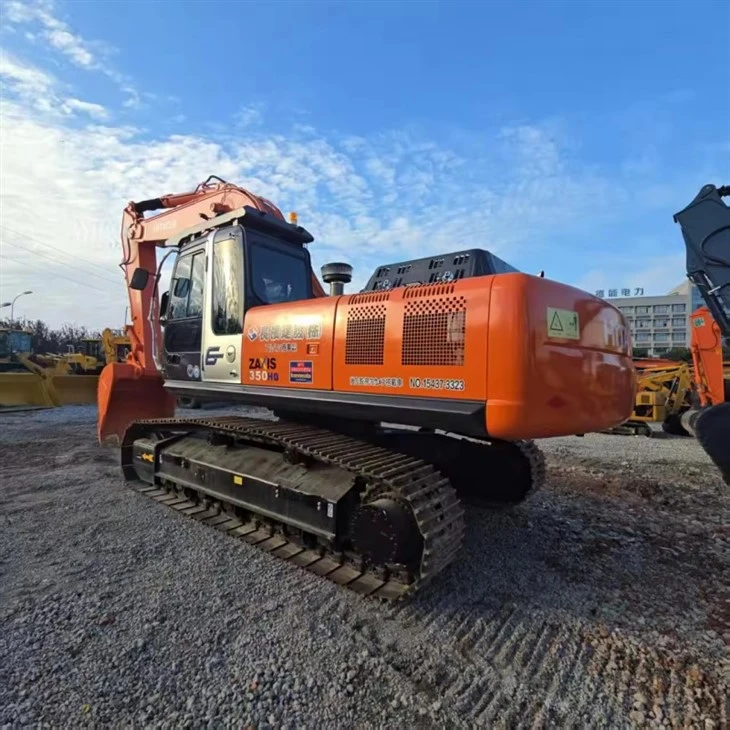
Now, let’s talk about when to replace the entire starter vs. repair it, a question I get all the time from PC220 owners. For machines under 5,000 operating hours, repairing the starter (replacing brushes, drive gear, or solenoid) is almost always the better choice, as the parts are affordable and the labor is minimal. For machines over 8,000 hours, I recommend a full starter replacement, as internal wear on the armature and field windings is usually extensive enough that repair isn’t worth the cost. When replacing a PC220 starter, make sure you get an OEM or high-quality aftermarket part specifically made for this model—generic starters for other excavators, like a Hitachi ZX350 Hydraulic Excavator’s starter, will not fit the PC220’s mounting pattern or voltage requirements, leading to fit issues and premature failure.
Preventive maintenance is the best way to avoid starter problems in the first place, and it’s a habit we push for all our PC220 customers. Every 250 operating hours, inspect the battery terminals, clean off corrosion, and tighten any loose connections. Every 1,000 hours, remove the starter (if accessible) and check the drive gear and brushes for wear, so you can replace parts before they fail on the job. Also, make sure to use the correct battery size for the PC220—using an under-sized battery that can’t deliver enough cranking power will put extra strain on the starter motor, leading to early wear. If you’re looking to upgrade your fleet with reliable equipment that’s less likely to have these kinds of issues, we also stock and source a range of used excavators for different needs, including the Komatsu PC200 Hydraulic Excavator, a popular model similar to the PC220 that’s perfect for smaller jobsites.
If you’ve gone through all these troubleshooting steps and still have a persistent starter issue, or if you’re in the market for a replacement PC220 starter, we’re here to help. Our team has decades of experience working with Komatsu excavators, and we can provide genuine OEM parts, certified repairs, and guidance to keep your equipment running smoothly. Whether you need a new starter, safety switch, or any other component for your PC220, we’re ready to connect you with the solutions that fit your jobsite needs. Don’t let a starter problem bring your work to a halt—reach out to our team today to discuss your requirements and get the reliable support you need.

References
Komatsu Limited. (2021). PC220-8 Hydraulic Excavator Service Manual. Komatsu Forestry and Construction Equipment Division.
Heavy Equipment Maintenance Association. (2022). Common Starter Motor Failures in Heavy-Duty Crawler Excavators. HEMA Technical Bulletin Series.
Used Construction Equipment Guide. (2023). Proper Part Compatibility for Used Komatsu Excavator Components. Equipment Industry Research Report.