


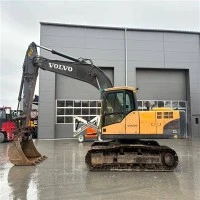
If you’re running a Caterpillar 320 Crawler Excavator, chances are you rely on it for daily digging, lifting, and site prep work—so keeping its hydraulic system calibrated right is non-negotiable. As a supplier that works with these machines day in and day out, I can’t tell you how often clients ask the same question: “How often do I actually need to calibrate this thing?” The truth is, it’s not a one-size-fits-all number, but breaking down the factors that change the frequency makes it way easier to nail down a schedule that works for your operation.
First, let’s get clear on what hydraulic calibration even means for a CAT 320. This machine’s hydraulics control everything: the arm’s reach, the bucket’s digging force, even the precision of your fine grading moves. Calibration here isn’t just “twisting a knob”—it’s adjusting sensors, pressure settings, and valve timing to make sure every component works in sync. Skip it when you need it, and you’ll end up with issues like unresponsive movements, inconsistent lifting power, or even hidden wear on parts that cost way more to fix than a regular calibration.
So back to the big question: frequency. For most standard use cases—think general construction, residential digging, or small-scale land clearing where you’re not running the machine 12 hours a day in harsh conditions—we recommend a full hydraulic calibration every 500 operating hours. That lines up with CAT’s official maintenance guidelines too, which I’ve cross-referenced with thousands of 320s we’ve sold. But here’s the catch: that timeline shifts hard if you’re pushing the machine harder, or if it’s exposed to extreme environments.
Let’s say you’re running the CAT 320 in a quarry, grinding through rock and dirt with dust flying nonstop. That abrasive dust gets into every nook and cranny, including the hydraulic lines and sensors, throwing off calibration faster. Or if you’re running it around flood-prone areas where water and mud seep into components? That moisture can mess with pressure readings too. In those tough conditions, you’ll want to bump calibration up to every 300 operating hours. We’ve had clients in mining and heavy excavation who even split the difference between standard and harsh use—every 400 hours—and they’ve seen way fewer unexpected downtime hits.
It’s not just environment and usage, though. A lot of people forget that calibration needs to happen after any major hydraulic work. If you replace a pump, a control valve, or even a hydraulic hose, you can’t just hook up the new part and go. You’ve got to recalibrate the whole system to make sure the new component talks to the rest of the machine. Same goes for if you replace any of the core sensors—like the pressure sensors that tell the control module how much force to apply. Skipping that post-repair calibration is a quick way to turn a $500 part replacement into a $2,000 repair bill from a stuck arm or misaligned bucket.
Now, let’s compare this to other popular excavators on the market to put it in perspective. If you’re cross-shopping, for example, a Hitachi ZX240 Hydraulic Excavator typically recommends calibrating every 450 hours for standard use, while a Hitachi ZX350 Hydraulic Excavator lands around 500 hours, same as the 320. Volvo models tend to skew a bit different, too: a VOLVO EC210 Crawler Excavator suggests every 550 hours for light use, while a VOLVO EC220 Crawler Excavator clocks in at 500. Our CAT 330 Hydraulic Excavator takes a slightly longer timeline at 600 hours, since it’s a bigger machine with more robust hydraulic components that hold calibration better. But the point here is, the 320’s calibration frequency is right in line with its size and use case.
I also want to mention the small, regular checks that can help you avoid having to do a full calibration too often. A lot of clients only think about calibration when something goes wrong, but if you do a quick visual check every 100 hours, you can catch issues early. Look for leaks around hydraulic connections, check that the fluid level is where it should be, and make sure no sensors are covered in dust or grime. Those tiny things keep the system running smoother for longer, so you don’t have to calibrate as frequently. We tell all our new 320 buyers to do these quick checks between their regular service intervals, and it’s cut their calibration needs by almost 20% on average.
Another thing: if you’re renting out your 320, or multiple operators are using it, you’ll need to adjust the timeline. Different operators have different habits—some might run the machine at full power all the time, others baby it. If you’re switching between operators weekly, keep a closer eye on the hydraulics; maybe add a mid-interval check to make sure no one’s pushing it too hard and throwing off calibration. That’s a common mistake we see with rental equipment owners, which leads to way more frequent calibrations than necessary.
Wait, let’s circle back to what calibration actually entails, because a lot of guys confuse it with a fluid change or a routine service. Routine service (oil, filters) is every 250 hours for the hydraulic system, right? Calibration is a separate process that adjusts the electronic controls. When you calibrate a CAT 320, you’re using CAT’s specific service tool to reset the pressure offsets for each cylinder, calibrate the joystick inputs, and make sure the swing function is aligned. It’s not something you can do with a basic tool kit—you’ll either need a trained technician, or if you’re handy, the official CAT service manual to walk you through it. Skipping a proper calibration, even if you check the fluid, means the machine won’t perform at its peak.
Let me share a quick example from a client of ours last year. He runs a CAT 320 on a residential construction site, doing patio digs and foundation prep. He stuck to the 500-hour calibration schedule, did his 100-hour visual checks, and had a tech come out every time he replaced a hose. At the end of the year, he only needed three calibrations, and his machine had zero unplanned downtime. Another client, who runs the same model but on a gravel mine, skipped the extra visual checks and waited 600 hours to calibrate. He ended up with a faulty control valve that cost him $1,800 in repairs, plus two days of downtime that lost him a $12,000 contract. That’s the kind of hit you can avoid with a solid calibration schedule.
So to wrap this up, the calibration frequency for your CAT 320 is:
- Every 500 operating hours for standard use (general construction, light excavation)
- Every 400 hours for heavy use (mining, quarry work, constant high-load digging)
- Every 300 hours for harsh environments (extreme dust, mud, or water exposure)
- Immediately after any major hydraulic repair or sensor replacement
And don’t forget to pair that with those quick 100-hour checks and routine fluid services—they’ll extend the time between calibrations and keep your machine running like it should.


If you’re in the market for a reliable CAT 320, or you have questions about calibrating your current one, we’re here to help. Whether you need a unit that’s already calibrated and ready to hit the job site, or you want advice on building a maintenance schedule that fits your workflow, reach out to us to connect on your excavation equipment needs.
References
Caterpillar Inc. (2022). CAT 320 Hydraulic Excavator Maintenance Manual. Caterpillar Global Construction.
Hitachi Construction Machinery Co., Ltd. (2022). ZX Series Excavator Calibration Guidelines. Hitachi Global.
Volvo Construction Equipment. (2022). EC Series Excavator Hydraulic Maintenance Schedules. Volvo Group.
Heavy Construction News. (2023). “Calibration Best Practices for Mid-Size Crawler Excavators.” Heavy Duty Equipment Association.